How to Tune Your Guitar
What Is Tuning?
Tuning means adjusting each string of your guitar to the correct pitch. Guitars naturally go out of tune over time — temperature changes, humidity, and the simple act of playing all cause the strings to drift.
If you practice with an out-of-tune guitar, you’ll have a harder time developing a good ear for pitch. The problem becomes especially noticeable when you play with other people or listen back to a recording — even small pitch differences stand out clearly. It might feel like a chore at first, but making tuning a habit before every practice session is well worth it.
Pluck a String
To tune, you need to pluck one string at a time. You can use a pick or your fingers — either works fine. If you’re not yet comfortable holding a pick, just use your finger for now.
Using the B.Click Tuner
B.Click has a built-in tuner that uses your device’s microphone — no separate tuner needed.
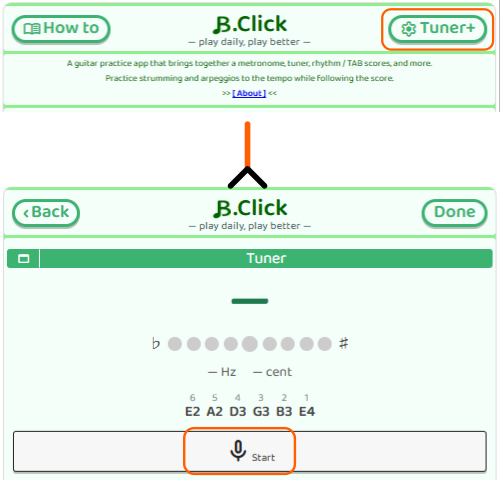
Open the tuner screen following the steps shown above, then press the START button to begin tuning. Hold your guitar near the mic and pluck one string at a time.
Placing your microphone (smartphone) near the sound hole gives the best results.

Standard Tuning Notes
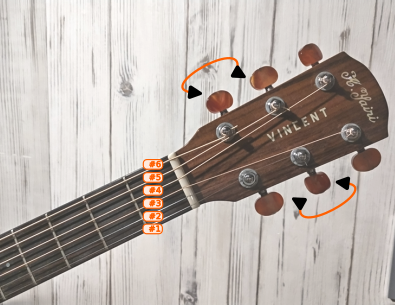
In standard tuning, the six strings are tuned to the following notes, from thickest to thinnest:
| String | Note |
|---|---|
| 6th (thickest) | E2 |
| 5th | A2 |
| 4th | D3 |
| 3rd | G3 |
| 2nd | B3 |
| 1st (thinnest) | E4 |
Check the note name shown on the tuner and adjust each string one by one.
Reading the Display
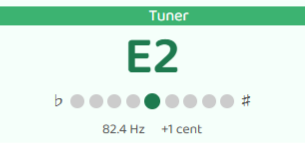
The tuner shows the name of the note it’s detecting and how far off the pitch is.
- Green: You’re in tune — nice!
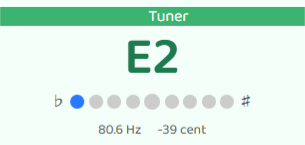
- Blue (needle left): The string is too low. Turn the tuning peg to raise the pitch.
- Red (needle right): The string is too high. Turn the tuning peg to lower the pitch.
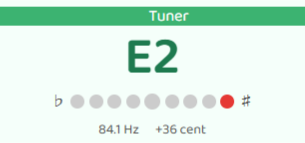
Slowly adjust the peg until the needle settles in the green center zone. When all strings are tuned, press the STOP button to close the tuner.
Tuning Tips
- Pluck the string and check right away — the pitch is most stable right after you play it.
- Tune up from below — if a string is flat, try going a little lower first and then tuning up. This reduces slack in the peg and keeps the tuning more stable.
- New strings go out of tune quickly — they need time to stretch. Go through all six strings two or three times per session until they settle down.
Once everything is in tune, let’s start practicing!
Easy to Overlook
Stopping after just one pass
Many beginners tune each string from the 6th down to the 1st and then call it done. But each time you turn a tuning peg, the tension across all the strings shifts slightly — which means the strings you already tuned can drift a little out of place.
After going through all six strings once, go back to the 6th string and check again. Repeating this two or three times lets everything settle into tune together.