Adjusting the Tempo
Slow First, Then Faster
A common piece of advice for guitar practice is “start slow.” Instead of playing fast and getting sloppy, it’s more effective to play accurately at a slow tempo and then gradually speed up. You’ll actually progress faster that way.
If there’s a piece you can’t play quickly, try dropping the tempo way down. A good rule of thumb is to start at 60–70% of your target tempo. For example, if your goal is 120 BPM, begin practicing at 72–84 BPM. It might feel almost too slow — that’s exactly right. Playing slowly and accurately builds the skill far more reliably than rushing through at full speed.
Using the Tempo Dial
Adjust the tempo by turning the tempo dial. You can also use the ±1 / ±10 buttons next to the dial to increase or decrease the tempo by 1 or 10 at a time.
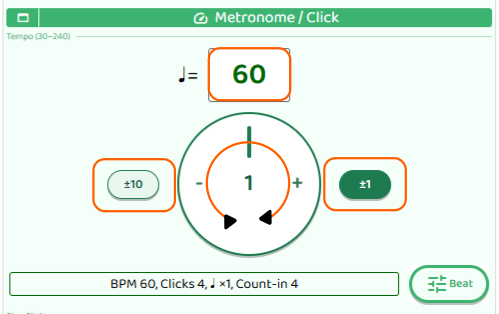
The available tempo range is 30–240 BPM.
Tap Tempo
When you’re wondering “what tempo is this song?”, tap the tempo dial four times in rhythm and the tempo will automatically be set to match. Just tap along while listening to the song — no need to figure out the number yourself.
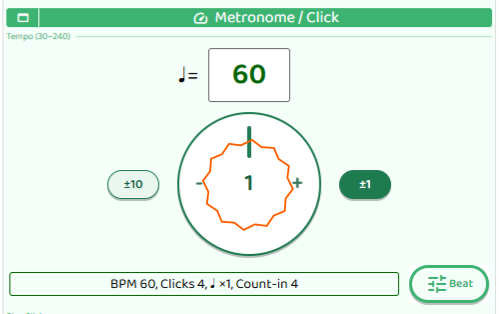
Note: if more than 2 seconds pass between taps, the count resets.
If you have a song you want to play, use Tap Tempo to find its tempo first. Once you know your target, start slow and gradually work your way up.
Building Up Step by Step
Once you can play accurately at a slow tempo, start raising it — but do it gradually. Increase by 5–10 BPM at a time rather than jumping ahead.
Here’s an example of working toward 120 BPM:
- Play cleanly at 80 BPM
- Move up to 88 BPM and practice there
- Once 88 BPM feels stable, step up to 96 BPM
- Keep going until you reach your goal of 120 BPM
If mistakes start creeping in or your playing feels rough at a new tempo, drop back one step. Stepping back isn’t a setback — it’s the right way to make sure each level is truly solid before moving on. Steady, patient progress is always the fastest route in the end.
※ Note: Tempo markings in sheet music use Italian words to indicate the general speed of a piece. Here are the most common ones with their approximate BPM ranges.
| Marking | Pronunciation | Approx. BPM | Meaning |
|---|---|---|---|
| Largo | LAR-go | ~40 | Very slow and broad |
| Andante | an-DAN-teh | ~70 | Walking pace |
| Moderato | mo-deh-RAH-to | ~100 | Moderate speed |
| Allegro | ah-LEH-gro | ~120 | Fast and lively |
| Presto | PREH-sto | ~180 | Very fast |
These are approximate — the exact BPM can vary depending on the performer and era.