Changing Your Strum Pattern
Strum Patterns Change the Mood
Once you can press chords and play in time with the tempo, the next step is to change your strum pattern. Even with the same chord progression, the feel of a song can change dramatically depending on how detailed the strumming is and how the rhythms are combined.
Quarter Notes (Downstrokes Only)
One downstroke per click. This is the simplest shape and the basic pattern you have already used in earlier practice. It creates a relaxed feel.
Eighth Notes (Down + Up)
Two strokes per click: down then up. This is twice as detailed as quarter notes, so the rhythm feels a little busier. Try to keep the downstrokes and upstrokes evenly spaced.
Sixteenth Notes (Down→Up→Down→Up)
Four strokes per click. This creates an even more detailed rhythm. Start with a slow tempo and focus on keeping your hand movement even.
Mixed Patterns
Combining quarter notes, eighth notes, and sixteenth notes within one measure creates more expression in the rhythm. For example, you might play only downstrokes for the first two beats, then down-up strums for the last two beats. Adding this kind of variation makes your playing more musical.
Whole Notes and Half Notes
You can also play patterns where you strum once and let the sound ring for 4 beats (whole note) or 2 beats (half note). This is also good practice for pressing the chord firmly and making it sound clean.
Try It with a Score: Quarter, Eighth, and Sixteenth Notes
B.Click includes a practice score called stroke_4-8-16_note.pdf in the sample scores. It places quarter-note, eighth-note, and sixteenth-note strums in order, and shows how to play them with ↓ (down) and ↑ (up) arrows.
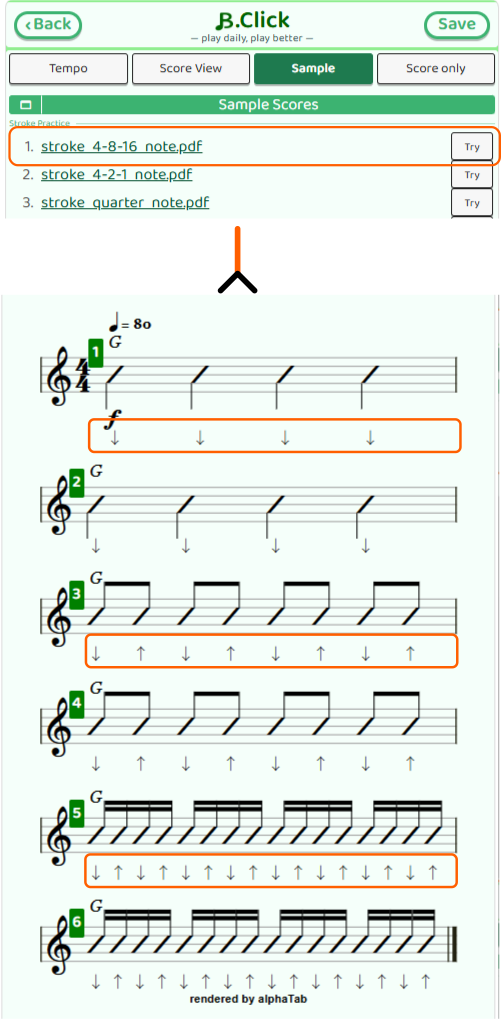
The key point is that as the notes get shorter, your right-hand movement also becomes more detailed. Quarter notes are one downstroke per click, eighth notes are down then up, and sixteenth notes are twice as detailed again: down, up, down, up. Set a slow tempo at first and focus on keeping the spacing between downstrokes and upstrokes even.
Try It with a Score: Quarter, Half, and Whole Notes
There is another practice score called stroke_4-2-1_note.pdf. This one is for quarter notes, half notes, and whole notes, and all the strokes are ↓ (down) strokes.
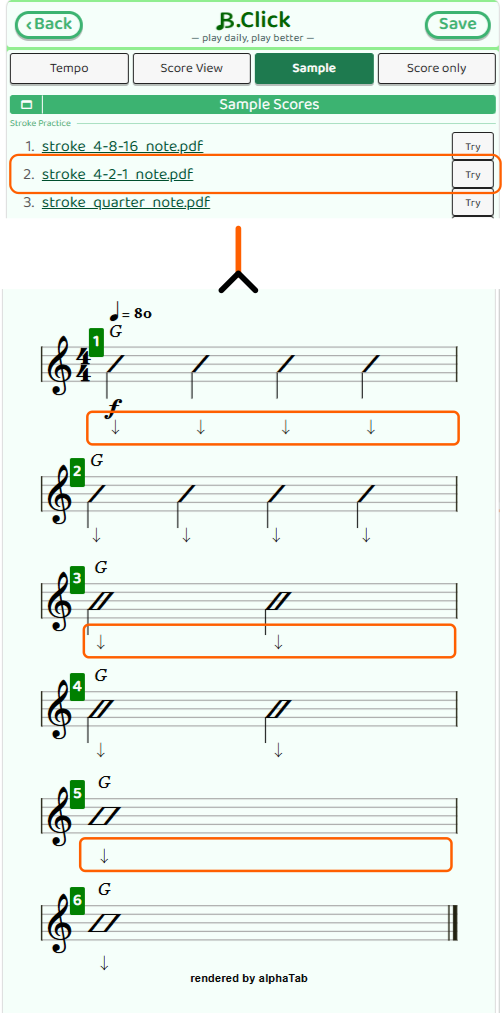
With this score, focus less on increasing the number of strokes and more on how long the sound continues. Quarter notes are played once per click, half notes are held for 2 beats, and whole notes are held for all 4 beats of one measure. This is also useful for checking whether the chord sound continues cleanly after you strum.