Strumming with Chord Changes
The Key to Chord Changes: Move Early
After working on strum patterns, the next step is chord changes. Chords can change at the start of a measure or even in the middle of one.
The ideal timing to move your fingers is just before the beat. If you wait until the beat arrives to start moving, you’ll always be a little late. As soon as you know the next chord is coming, start shifting your fingers a fraction of a beat early.
Keep Shared Fingers in Place
When you change chords, check if any fingers are pressing the same string and fret as in the previous chord. If so, leave those fingers right where they are and only move the others. A clear example: when going from G to Em, the middle finger stays in the same place, so you only need to move the remaining fingers.
Common Chord Combinations to Practice
These progressions come up again and again — worth getting comfortable with early on:
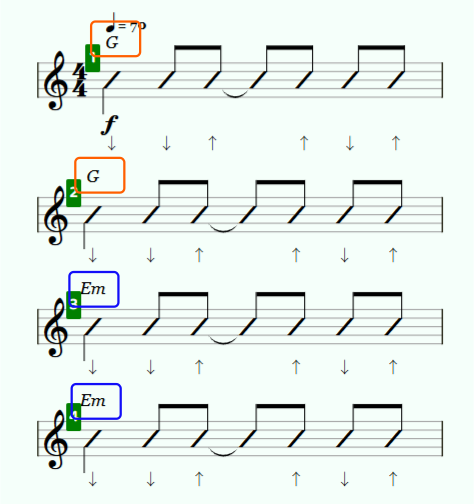
- G → Em → C → D: Bright and powerful. Common in pop and rock.
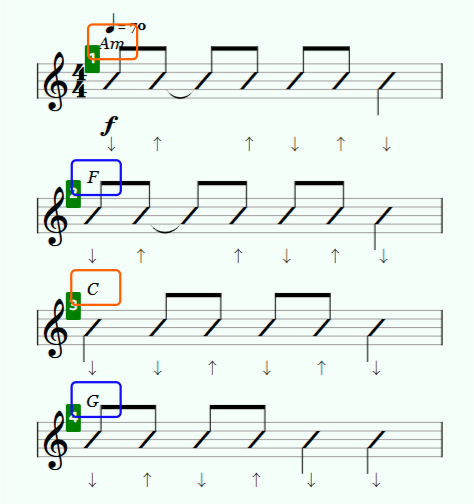
- Am → F → C → G: Warm and emotional. Often heard in ballads and J-Pop.
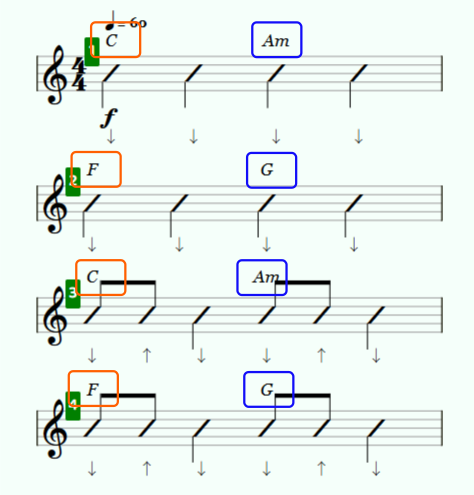
- C → Am → F → G: A standard progression often used as a repeating chord cycle. It has a familiar, approachable sound that you’ve probably heard before.
Practice these standard progressions slowly and repeatedly until your fingers find the shapes on their own.
B.Click includes sample scores for all three of these progressions.
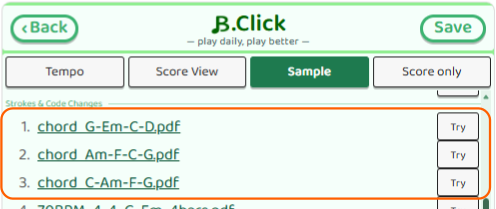
Each score has a different chord change pace — start with the one where chords change every two measures, then move up as you get comfortable.
chord_G-Em-C-D.pdf — chords change every two measures.
chord_Am-F-C-G.pdf — chords change every measure.
chord_C-Am-F-G.pdf — two chords within a single measure.
Slow Down to Speed Up
If chord changes feel too rushed, lower the tempo in B.Click using the tempo dial. Giving yourself more time to move your fingers lets you build the habit correctly. Once you can change chords cleanly at a slow tempo, gradually bring the BPM up. This is the most reliable path to getting faster.