Using a Capo and Tuning
What Is a Capo?
A capo (short for capo tasto) is a clamp that attaches to the guitar neck and presses all strings down at a specific fret.
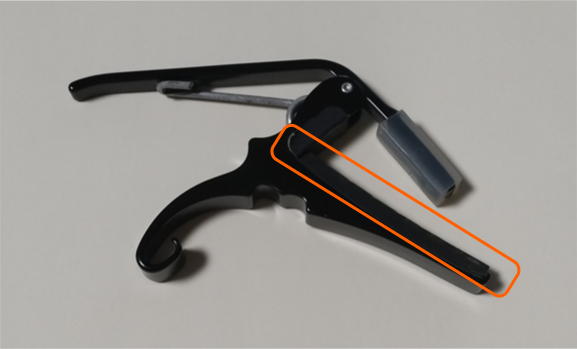
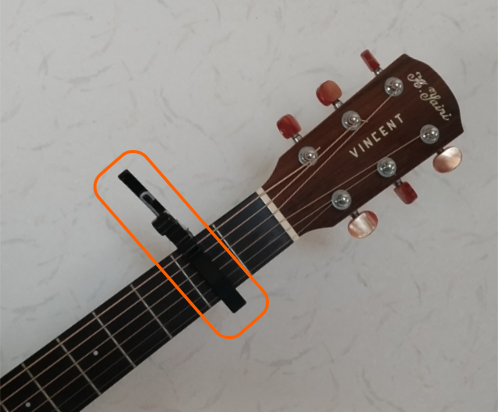
With a capo, you keep the same chord shapes while raising the key of the song. For example, placing a capo on the 2nd fret and playing a C chord shape produces a D chord sound. Capos are great for matching the key of a song or finding a more comfortable singing range.
Always Retune After Attaching a Capo
Attaching a capo changes the tension on the strings, which can shift the tuning slightly. Always retune your guitar after putting on a capo.
Skipping this step can make your chords sound slightly off even when your chord shapes are correct.
Tuning with the B.Click Tuner
The B.Click tuner uses your device’s microphone to detect the pitch of each string and shows you which note is sounding in real time — this works fine whether or not you have a capo attached.
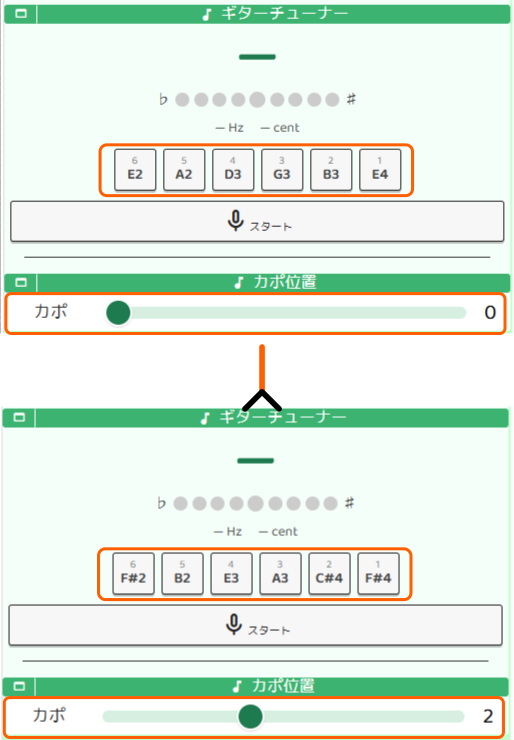
Open the tuner screen and press the START button. Pluck each string one at a time with the capo in place, and adjust the tuning peg until the needle settles in the center green zone.
With a capo, the open string notes change depending on the capo position. For example, with a capo on the 2nd fret:
| String | No capo | Capo 2nd fret |
|---|---|---|
| 6th | E2 | F#2 |
| 5th | A2 | B2 |
| 4th | D3 | E3 |
| 3rd | G3 | A3 |
| 2nd | B3 | C#4 |
| 1st | E4 | F#4 |
Match the note shown on the tuner to the target note for your capo position.
Tips for Using a Capo
- Place the capo just behind the fret (toward the body side). Too far from the fret increases the chance of buzzing.
- Make sure all strings are pressed evenly. If one string is not fully held down, it won’t ring cleanly.
- After attaching the capo, pluck each string to confirm it sounds clean before you start playing.
In practice, the tuning is more stable when the capo is close to the fret wire. Just avoid placing it so close that it gets in the way of your fretting hand. Try to find a position just behind the fret that still leaves your hand comfortable.
You can place a capo at the 5th fret or higher, but the playing space gets narrower and it can start to feel harder to play. If you are new to using a capo, songs that use the 1st to 3rd fret are usually easier to start with.
Easy to Overlook
Forgetting to retune after removing the capo
Many players remember to retune after putting the capo on, but forget to retune after taking it off. When you remove the capo, the string tension returns to its original state — and the tuning shifts again.
Whenever you remove the capo, tune your guitar just as you would when putting it on. Making “capo off → retune” a paired habit prevents you from unknowingly practicing with a guitar that’s drifted out of pitch.