Playing Melodies with Arpeggio
What Is Arpeggio?
Arpeggio is a technique where you play the notes of a chord one string at a time, in sequence.
Strumming sounds several strings at once, while arpeggio plays the notes one by one. Because the sounds from each string overlap and ring together, it creates a soft and delicate feel. It is especially common in ballads and slower songs.
Fingerstyle or Pick — Both Are Fine
Arpeggio is often associated with fingerstyle playing, but you can absolutely play it with a pick.
- Fingerstyle: Play one string at a time with your thumb, index finger, middle finger, or ring finger. It tends to produce a warm, soft tone.
- Pick playing: Slowly play one string at a time with a pick. It gives a clear, sharp sound.
Either approach is fine at first. Start with the style that feels easiest for you.
Try It with a B.Click Sample Score
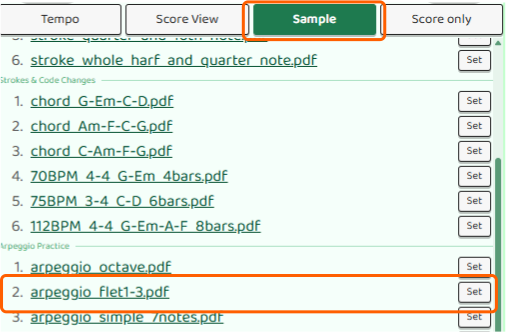
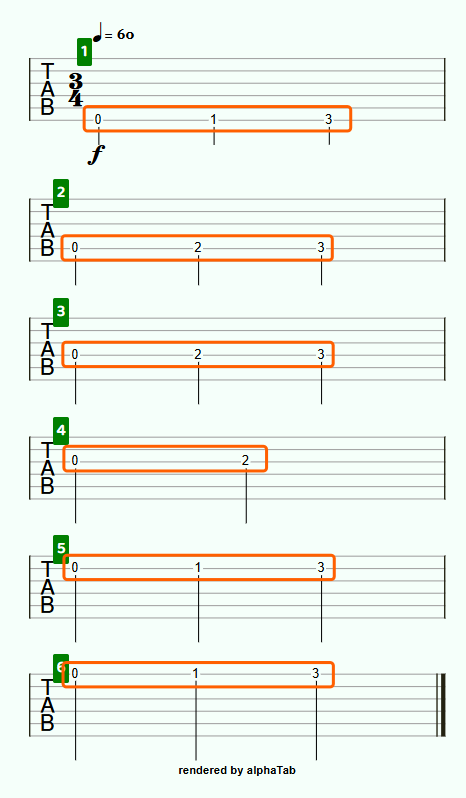
First, open arpeggio_flet1-3.pdf from Sample on the performance screen. It is a sample score that uses only frets 1 through 3, making it easy to follow notes with arpeggio.
Start by Playing from Low Strings to High Strings
As arpeggio practice, first try playing one string at a time in order from the 6th string (thick string) to the 1st string (thin string).
If you hold a chord shape and slowly play each string one by one, you can feel the notes stacking up one at a time.
In this sample, you can follow the notes in order from the 6th string toward the 1st string, like do re mi fa sol la ti do, so it is easier to learn the arpeggio movement and the way the pitch rises together.
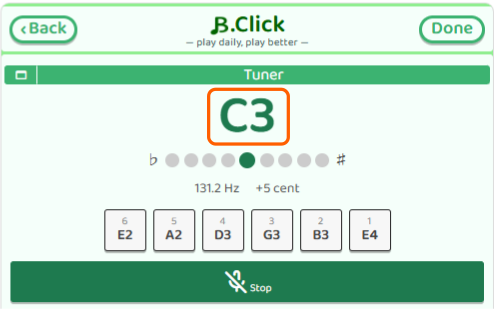
For example, if you press and play the 3rd fret of the 5th string, the tuner shows C3. This is the note do in solfege. When the numbers in tab notation start to connect not only with “where to press” but also with “what sound comes out,” practice becomes much easier to understand.
Practice in Time with B.Click
For arpeggio practice, it is best to set a slow tempo and play one note per click. Press the Tempo button on the score display screen to open the same tempo dial as the main screen, then lower it to a comfortable speed.
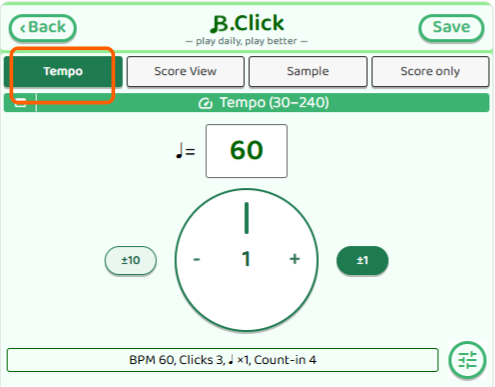
Practice with the idea of playing one string for each click. Once you get used to it, gradually raise the tempo.