 .Click
コードチェンジを組み込んで演奏しよう Strumming with Chord Changes Rasgueo con cambios de acordes
コードチェンジは「早め」がコツ
ストロークの変化の次は、コード変更です。コードは小節で変わることもあれば、小節の途中で変わることもあります。
弾いているコードから次のコードへ指を動かすタイミングは、拍の直前が理想です。完全に次の拍になってから動き出すと遅くなってしまいます。「次はCコードだな」と思ったら、クリック音よりひと呼吸早く指を移動し始めましょう。
共通する指はそのまま残す
コードを変えるとき、前のコードと同じ弦・同じフレットを使う指があれば、その指は動かさずにそのまま押さえておきましょう。分かりやすい例だと、GからEmへ変わるとき、共通する指は動かさないでよくなり、残りの指を移動するだけになります。
よく出てくるコードの組み合わせ
初心者のうちから練習しておくと便利なコード進行があります。よく使われるコード進行の一例を挙げます。
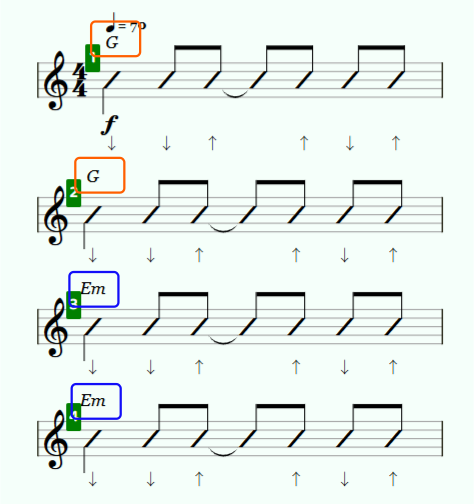
- G → Em → C → D:力強くて明るいサウンド。ポップス・ロックでよく登場します。
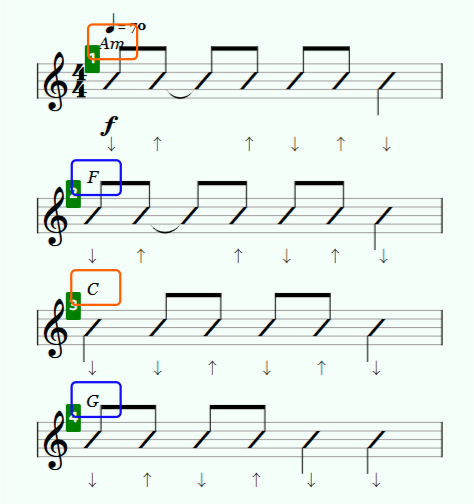
- Am → F → C → G:切なくて温かみのあるサウンド。バラードや J-POP によく使われます。
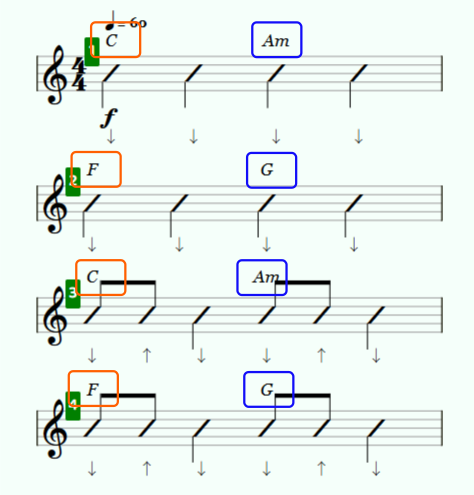
- C → Am → F → G:循環コードとしてよく使われる定番進行です。誰もが聴いたことのあるような、親しみやすい響きがあります。
定番のコード進行で、これらをゆっくりなテンポで繰り返し練習すると、指が自然にコードの形を覚えていきます。
B.Click にはこれらのコード進行を使ったサンプル楽譜が用意されています。それぞれコードチェンジのペースが異なります。まずは2小節ごとにコードが変わる楽譜から試して、慣れたらペースを上げていきましょう。
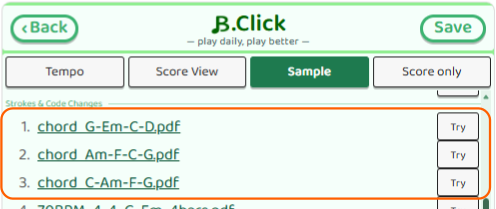
chord_G-Em-C-D.pdf ―― 2小節ごとにコードが変わります。
chord_Am-F-C-G.pdf ―― 1小節ごとにコードが変わります。
chord_C-Am-F-G.pdf ―― 1小節の中にコードが2つあります。
テンポを落として練習しよう
コードチェンジがうまくいかない場合は、まずテンポを落として練習しましょう。B.Click のテンポダイアルでBPMを下げると、指を動かす時間に余裕ができます。正確にコードチェンジできるテンポで練習を重ね、だんだんテンポを上げていくのが上達の近道です。
The Key to Chord Changes: Move Early
After working on strum patterns, the next step is chord changes. Chords can change at the start of a measure or even in the middle of one.
The ideal timing to move your fingers is just before the beat. If you wait until the beat arrives to start moving, you'll always be a little late. As soon as you know the next chord is coming, start shifting your fingers a fraction of a beat early.
Keep Shared Fingers in Place
When you change chords, check if any fingers are pressing the same string and fret as in the previous chord. If so, leave those fingers right where they are and only move the others. A clear example: when going from G to Em, shared fingers stay in place, so you only need to move the remaining fingers.
Common Chord Combinations to Practice
These progressions come up again and again — worth getting comfortable with early on:
- G → Em → C → D: Bright and powerful. Common in pop and rock.
- Am → F → C → G: Warm and emotional. Often heard in ballads and J-Pop.
- C → Am → F → G: A standard progression often used as a repeating chord cycle. It has a familiar, approachable sound that you've probably heard before.
Practice these standard progressions slowly and repeatedly until your fingers find the shapes on their own.
B.Click includes sample scores for all three of these progressions. Each score has a different chord change pace — start with the one where chords change every two measures, then move up as you get comfortable.
chord_G-Em-C-D.pdf — chords change every two measures.
chord_Am-F-C-G.pdf — chords change every measure.
chord_C-Am-F-G.pdf — two chords within a single measure.
Slow Down to Speed Up
If chord changes feel too rushed, lower the tempo in B.Click using the tempo dial. Giving yourself more time to move your fingers lets you build the habit correctly. Once you can change chords cleanly at a slow tempo, gradually bring the BPM up. This is the most reliable path to getting faster.
La clave del cambio de acordes: muévete antes
Tras practicar los patrones de rasgueo, el siguiente paso son los cambios de acorde. Los acordes pueden cambiar al inicio de un compás o incluso en medio de él.
El momento ideal para mover los dedos es justo antes del tiempo. Si esperas a que llegue el tiempo para empezar a moverlos, siempre irás un poco tarde. En cuanto sepas que viene el próximo acorde, empieza a mover los dedos un instante antes del clic.
Mantén los dedos compartidos en su lugar
Al cambiar de acorde, comprueba si algún dedo ya está pisando la misma cuerda y traste que en el acorde anterior. Si es así, deja ese dedo donde está y mueve solo el resto. Un ejemplo claro: al pasar de G a Em, los dedos compartidos no se mueven, así que solo hay que mover los demás.
Progresiones de acordes habituales para practicar
Estas progresiones aparecen una y otra vez — vale la pena aprenderlas pronto:
- G → Em → C → D: Brillante y poderoso. Muy común en pop y rock.
- Am → F → C → G: Cálido y emotivo. Habitual en baladas y J-Pop.
- C → Am → F → G: Una progresión estándar que se usa a menudo como ciclo de acordes. Tiene un sonido familiar y cercano que probablemente ya has escuchado.
Practícalas despacio y repetidamente hasta que los dedos encuentren las posiciones solos.
B.Click incluye partituras de ejemplo para estas tres progresiones. Cada partitura tiene un ritmo de cambio de acordes diferente — empieza con la que cambia cada dos compases y avanza a medida que te familiarices.
chord_G-Em-C-D.pdf — los acordes cambian cada dos compases.
chord_Am-F-C-G.pdf — los acordes cambian en cada compás.
chord_C-Am-F-G.pdf — dos acordes dentro de un mismo compás.
Reduce el tempo para ganar velocidad
Si los cambios de acorde se sienten apresurados, baja el tempo en B.Click con el dial de tempo. Darte más tiempo para mover los dedos te permite construir el hábito correctamente. Una vez que puedas cambiar de acorde limpiamente a un tempo lento, sube el BPM poco a poco. Es el camino más seguro para ganar velocidad.