 .Click
カポタストとチューニング Using a Capo and Tuning Usar un cejilla y afinar
カポタストって何?
カポタスト(カポ)とは、ギターのネックにすべての弦を同時に押さえるように取り付けて、ギターの鳴る音のキーを上げる器具です。
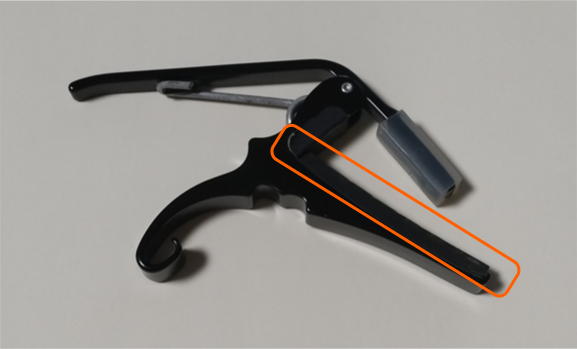
例えばこの画像のカポであれば、ゴムの部分をギターの弦に触れるように取り付けます。
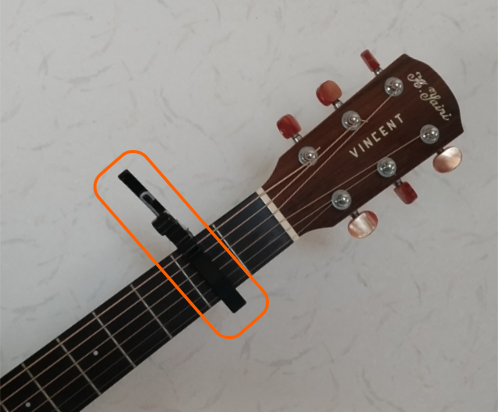
2フレットにカポを付けてCコードの形を押さえると、実際にはDのキーで鳴ります。歌いやすいキーに変えたいときや、曲のキーに合わせたいときに役立ちます。
カポを付けたらチューニングし直そう
カポを取り付けると、弦にかかる張力が変わり、音程がわずかにズレることがあります。カポを付けた後は必ずチューニングし直す習慣をつけましょう。
チューニングし直さないと、コードの押さえ方が正しくても響きが少し濁ったように聞こえることがあります。
B.Click のチューナーでチューニングする
このページの左側にあるチューナーで、カポを付けた状態のまま音程を確認できます。カポ位置スライダーを実際のカポ位置に合わせると、弦ガイドの音名もその位置に合わせて更新されます。
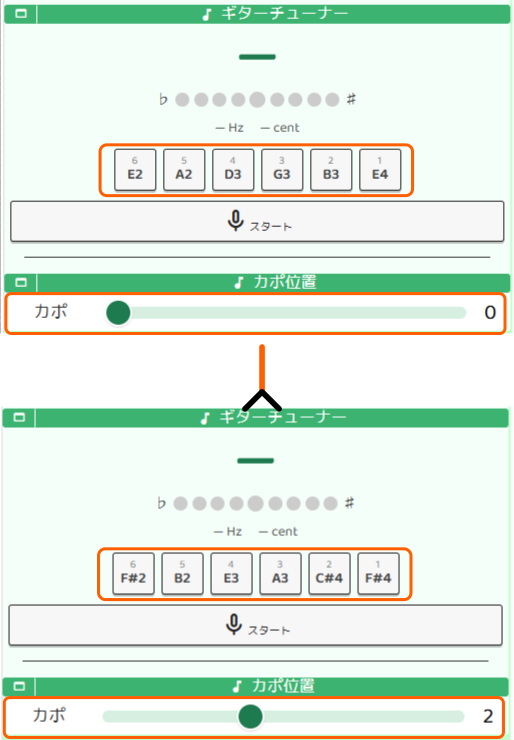
START ボタンを押し、カポを付けたまま弦を1本ずつ鳴らしてください。中央のドットが緑になるようにペグを調整します。
カポ2フレットの音名例
カポの位置によって合わせるべき音名が変わります。たとえば、2フレットにカポを付けた場合、開放弦の音は次のようになります。
| 弦 | カポなし | カポ2フレット |
|---|---|---|
| 6弦 | E2 | F#2 |
| 5弦 | A2 | B2 |
| 4弦 | D3 | E3 |
| 3弦 | G3 | A3 |
| 2弦 | B3 | C#4 |
| 1弦 | E4 | F#4 |
チューナーに表示される音名がこれらの音になるように合わせてください。また、音のボタンを押して同じ音であることを確認もできます。
カポの付け方のコツ
- フレットのすぐ脇(ボディ側)に装着するのがポイントです。フレットから離れすぎるとビビリ(雑音)が出やすくなります。
- すべての弦が均一に押さえられているか確認してください。1本でも浮いていると音がしっかり鳴りません。
- カポを付けた後は、弦を1本ずつ鳴らして音がきれいに出るか確認してから練習を始めましょう。
実際に使うときは、カポをフレット(金属の棒)に近い位置へ置くと音が安定しやすいです。ただし、コードを押さえる手にぶつかるほど寄せすぎると弾きにくくなるので、フレットの少し手前で、左手の邪魔にならない位置を探してみてください。
5フレット以上に取り付けることもできますが、高い位置になるほど弾くスペースが狭くなり、少し弾きづらくなってきます。最初は1〜3フレットあたりで使う曲から試すと扱いやすいです。
見落としがちな点
カポを外した後にチューニングし直すのを忘れる
カポを付けるときは意識してチューニングし直す人も、外した後はそのまま弾き続けてしまうことがよくあります。カポを取り外すと弦の張力が元に戻り、音程がズレることがあります。
カポを外したら、付けるときと同じようにチューニングし直しましょう。「カポを外したらチューニング」をセットの習慣にしておくと、気づかないまま音程がズレた状態で練習してしまうのを防げます。
What Is a Capo?
A capo is a clamp that attaches to the guitar neck and presses all strings down at a specific fret.
With a capo, you keep the same chord shapes while raising the key of the song. For example, placing a capo on the 2nd fret and playing a C chord shape produces a D chord sound. Capos are great for matching the key of a song or finding a more comfortable singing range.
Always Retune After Attaching a Capo
Attaching a capo changes the tension on the strings, which can shift the tuning slightly. Always retune your guitar after putting on a capo.
Skipping this step can make your chords sound slightly off even when your chord shapes are correct.
Tune with the B.Click Tuner
Use the tuner on the left side of this page to check your pitch with the capo in place. Set the capo slider to the fret where your capo is attached, and the string guide notes will update to match that position.
Press the START button, pluck each string one at a time, and adjust the tuning peg until the center dot turns green.
Example: Capo on the 2nd Fret
With a capo, the open string notes change depending on the capo position. For example, with a capo on the 2nd fret:
| String | No capo | Capo 2nd fret |
|---|---|---|
| 6th | E2 | F#2 |
| 5th | A2 | B2 |
| 4th | D3 | E3 |
| 3rd | G3 | A3 |
| 2nd | B3 | C#4 |
| 1st | E4 | F#4 |
Match the note shown on the tuner to the target note for your capo position.
Tips for Using a Capo
- Place the capo just behind the fret toward the body side. Too far from the fret increases the chance of buzzing.
- Make sure all strings are pressed evenly. If one string is not fully held down, it will not ring cleanly.
- After attaching the capo, pluck each string to confirm it sounds clean before you start playing.
In practice, the tuning is more stable when the capo is close to the fret wire. Just avoid placing it so close that it gets in the way of your fretting hand. Try to find a position just behind the fret that still leaves your hand comfortable.
You can place a capo at the 5th fret or higher, but the playing space gets narrower and it can start to feel harder to play. If you are new to using a capo, songs that use the 1st to 3rd fret are usually easier to start with.
Easy to Overlook
Forgetting to retune after removing the capo
Many players remember to retune after putting the capo on, but forget to retune after taking it off. When you remove the capo, the string tension returns to its original state — and the tuning shifts again.
Whenever you remove the capo, tune your guitar just as you would when putting it on. Making "capo off → retune" a paired habit prevents you from unknowingly practicing with a guitar that's drifted out of pitch.
¿Qué es un cejilla?
Un cejilla, también llamado capo, es una pinza que se fija al mástil de la guitarra y presiona todas las cuerdas a la vez en un traste determinado.
Con el cejilla puedes mantener las mismas posiciones de acordes y subir el tono de la canción. Por ejemplo, si lo colocas en el traste 2 y tocas la forma de acorde de Do (C), la guitarra suena en Re (D). Los cejillas son ideales para adaptar el tono de una canción o encontrar una tesitura más cómoda para cantar.
Afina siempre después de colocar el cejilla
Al poner el cejilla cambia la tensión de las cuerdas, lo que puede desafinar la guitarra ligeramente. Afina siempre tu guitarra después de colocar el cejilla.
Si no lo haces, los acordes pueden sonar un poco desafinados aunque tus posiciones sean correctas.
Afinar con el afinador de B.Click
Usa el afinador del lado izquierdo de esta página para comprobar el tono con el cejilla puesto. Ajusta el control de cejilla al traste donde está colocado, y las notas de guía de las cuerdas se actualizarán.
Pulsa el botón START, toca cada cuerda por separado y ajusta la clavija hasta que el punto central se ponga verde.
Ejemplo: cejilla en el traste 2
Con el cejilla, las notas de las cuerdas al aire cambian según la posición. Por ejemplo, con el cejilla en el traste 2:
| Cuerda | Sin cejilla | Cejilla traste 2 |
|---|---|---|
| 6ª | Mi (E2) | Fa# (F#2) |
| 5ª | La (A2) | Si (B2) |
| 4ª | Re (D3) | Mi (E3) |
| 3ª | Sol (G3) | La (A3) |
| 2ª | Si (B3) | Do# (C#4) |
| 1ª | Mi (E4) | Fa# (F#4) |
Ajusta cada cuerda hasta que la nota mostrada en el afinador coincida con la nota objetivo para tu posición de cejilla.
Consejos para usar el cejilla
- Coloca el cejilla justo detrás del traste, hacia el cuerpo de la guitarra. Si está demasiado lejos del traste, es más probable que suene zumbido.
- Asegúrate de que todas las cuerdas estén presionadas de forma uniforme. Si una cuerda no está bien sujeta, no sonará limpia.
- Tras colocar el cejilla, toca cada cuerda para comprobar que suena limpia antes de empezar a tocar.
En la práctica, la afinación suele ser más estable cuando el cejilla está cerca del traste metálico. Eso sí, no lo coloques tan cerca que moleste a la mano que pisa los acordes. Busca una posición justo detrás del traste que siga siendo cómoda para tocar.
También puedes colocar el cejilla en el traste 5 o más arriba, pero el espacio para tocar se vuelve más estrecho y puede resultar más incómodo. Si estás empezando a usar cejilla, suele ser más fácil comenzar con canciones que lo usan entre los trastes 1 y 3.
Algo que se suele pasar por alto
Olvidarse de afinar después de quitar el cejilla
Muchos guitarristas recuerdan afinar después de poner el cejilla, pero se olvidan de afinar al quitarlo. Al retirar el cejilla, la tensión de las cuerdas vuelve a su estado original y la afinación cambia de nuevo.
Cada vez que quites el cejilla, afina la guitarra igual que cuando lo colocas. Convertir "quitar el cejilla → afinar" en un hábito automático te evita practicar sin darte cuenta con la guitarra desafinada.