 .Click
アルペジオでメロディを弾いてみよう Play Melodies with Arpeggios Toca melodías con arpegios
アルペジオって何?
アルペジオ(arpeggio)は、コードの音を1弦ずつ順番に鳴らす奏法です。
ストロークがジャラーンと複数の弦を一度に鳴らすのに対し、アルペジオは1音ずつ順番に弾いていきます。各弦の音が重なって響くため、やわらかく繊細な雰囲気になります。バラードやスローな曲で特によく使われる奏法です。
指弾きでもピックでも大丈夫
アルペジオといえば指弾き(フィンガーピッキング)のイメージがありますが、ピックでも十分に演奏できます。
- 指弾き:親指や人差し指〜薬指で1弦ずつ弾く。温かみのある柔らかい音色が出やすい。
- ピック弾き:ピックで1弦ずつゆっくりと弾く。クリアでシャープな音になる。
B.Click のサンプル楽譜で試してみよう
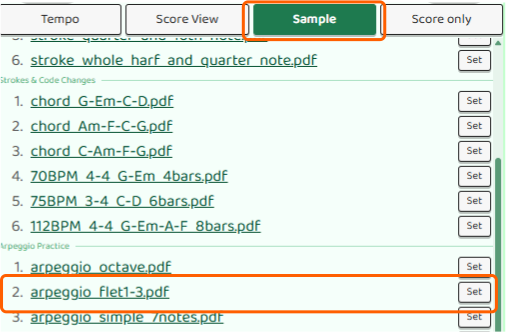
まずは演奏画面の Sample から、arpeggio_flet1-3.pdf を開いてみましょう。フレット1〜3の範囲だけを使って、アルペジオで音を追いやすいサンプル楽譜です。
まずは低音弦→高音弦の順に弾いてみよう
アルペジオの練習として、まずは6弦(太い弦)→ 1弦(細い弦)の順に、1本ずつ弾いてみましょう。
コードを押さえた状態で1弦ずつゆっくり弾いていくと、音が1つずつ積み重なっていく感じが分かります。
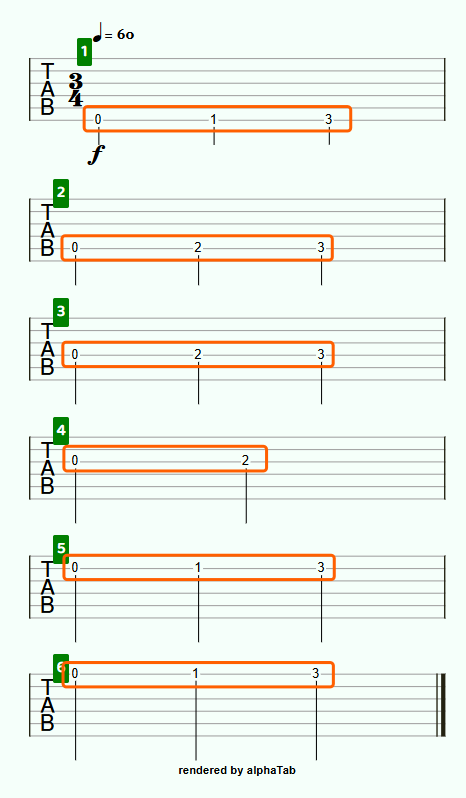
このサンプルでは、6弦から1弦へ向かって ドレミファソラシド のように順番に音を追えるので、アルペジオの動きと音の上がり方を一緒に覚えやすくなっています。
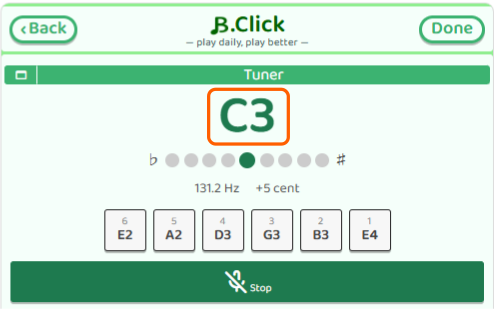
例えば 5弦の3フレット を押さえて鳴らすと、チューナーでは C3 と表示されます。これはドレミの ド にあたる音です。TAB譜の数字が「どこを押さえるか」だけでなく、「どんな音が鳴るか」と結びついてくると、練習がかなり分かりやすくなります。
B.Click でテンポに合わせて練習しよう
アルペジオの練習では、テンポをゆっくりに設定して、クリックに合わせて1音ずつ弾くのがおすすめです。楽譜表示画面の Tempo ボタンを押すと、トップ画面と同じテンポダイアルが開くので、そこで無理のない速さまで落としてみましょう。
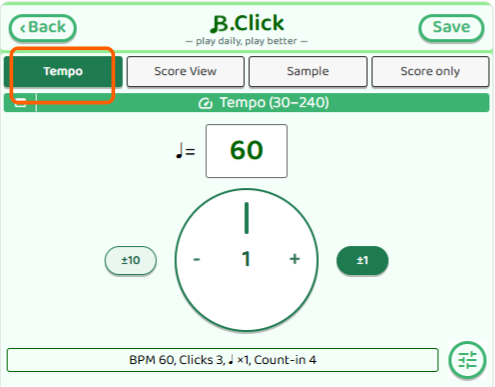
1クリックごとに1弦を弾くイメージで練習してみましょう。慣れてきたら少しずつテンポを上げていけばOKです。
What Is Arpeggio?
Arpeggio is a technique where you play the notes of a chord one string at a time, in sequence.
Strumming sounds several strings at once, while arpeggio plays the notes one by one. Because the sounds from each string overlap and ring together, it creates a soft and delicate feel. It is especially common in ballads and slower songs.
Fingerstyle or Pick — Both Are Fine
Arpeggio is often associated with fingerstyle playing, but you can absolutely play it with a pick.
- Fingerstyle: Play one string at a time with your thumb, index finger, middle finger, or ring finger. It tends to produce a warm, soft tone.
- Pick playing: Slowly play one string at a time with a pick. It gives a clear, sharp sound.
Try It with a B.Click Sample Score
First, open arpeggio_flet1-3.pdf from Sample on the performance screen. It is a sample score that uses only frets 1 through 3, making it easy to follow notes with arpeggio.
Start by Playing from Low Strings to High Strings
As arpeggio practice, first try playing one string at a time in order from the 6th string (thick string) to the 1st string (thin string).
If you hold a chord shape and slowly play each string one by one, you can feel the notes stacking up one at a time.
In this sample, you can follow the notes in order from the 6th string toward the 1st string, like do re mi fa sol la ti do, so it is easier to learn the arpeggio movement and the way the pitch rises together.
For example, if you press and play the 3rd fret of the 5th string, the tuner shows C3. This is the note do in solfege. When the numbers in tab notation start to connect not only with "where to press" but also with "what sound comes out," practice becomes much easier to understand.
Practice in Time with B.Click
For arpeggio practice, it is best to set a slow tempo and play one note per click. Press the Tempo button on the score display screen to open the same tempo dial as the main screen, then lower it to a comfortable speed.
Practice with the idea of playing one string for each click. Once you get used to it, gradually raise the tempo.
¿Qué es el arpegio?
El arpegio es una técnica en la que tocas las notas de un acorde cuerda por cuerda, en orden.
Mientras que el rasgueo hace sonar varias cuerdas a la vez, el arpegio toca las notas una por una. Como los sonidos de cada cuerda se superponen y resuenan juntos, se crea un ambiente suave y delicado. Es una técnica muy usada en baladas y canciones lentas.
Con dedos o con púa está bien
El arpegio suele asociarse con tocar con los dedos, pero también puedes tocarlo perfectamente con púa.
- Con dedos: Tocas una cuerda cada vez con el pulgar, el índice, el medio o el anular. Suele producir un tono cálido y suave.
- Con púa: Tocas una cuerda cada vez lentamente con la púa. Produce un sonido claro y definido.
Pruébalo con una partitura de ejemplo de B.Click
Primero, abre arpeggio_flet1-3.pdf desde Sample en la pantalla de interpretación. Es una partitura de ejemplo que usa solo los trastes 1 a 3, por lo que resulta fácil seguir las notas con arpegio.
Empieza tocando de las cuerdas graves a las agudas
Como práctica de arpegio, primero intenta tocar cuerda por cuerda en orden desde la 6ª cuerda (cuerda gruesa) hasta la 1ª cuerda (cuerda fina).
Si mantienes pulsada una posición de acorde y tocas lentamente cada cuerda una por una, notarás cómo las notas se van acumulando una a una.
En este ejemplo puedes seguir las notas en orden desde la 6ª cuerda hacia la 1ª, como do re mi fa sol la si do, así que es más fácil aprender a la vez el movimiento del arpegio y cómo sube la altura del sonido.
Por ejemplo, si pulsas y tocas el traste 3 de la 5ª cuerda, el afinador muestra C3. Ese es el sonido do. Cuando los números de la tablatura se conectan no solo con "dónde pulsar", sino también con "qué sonido sale", la práctica se vuelve mucho más fácil de entender.
Practica al tempo de B.Click
Para practicar arpegios, se recomienda ajustar un tempo lento y tocar una nota por cada clic. Pulsa el botón Tempo en la pantalla de visualización de la partitura para abrir el mismo dial de tempo que en la pantalla principal, y bájalo hasta una velocidad cómoda.
Practica con la idea de tocar una cuerda por cada clic. Cuando te acostumbres, sube el tempo poco a poco.